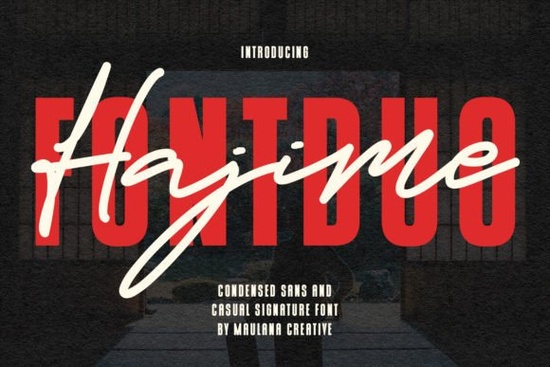
Finding the right typeface pairing can take hours of trial and error. The Hajime Font Duo Font solves this problem by combining a sleek, condensed sans-serif with a trendy handwritten script. This combination gives designers and small business owners a ready-made pairing that works beautifully for branding, packaging, and social media graphics. Whether you are setting up a new Etsy shop or designing a logo for a local cafe, having two complementary styles in one package saves time and keeps your visual identity consistent.
What makes a good font duo for everyday branding?
A successful typeface pairing relies on contrast. You want one style to handle the heavy lifting for readability, while the other adds character. The condensed sans-serif in this package provides a clean, modern foundation. It is highly legible, making it perfect for business names, website headers, and product labels. While some seasonal projects call for highly themed typography like festive holiday display styles, everyday branding usually requires a cleaner, more versatile foundation that will not look outdated after a few months.
The handwritten script acts as the accent. It brings a human, approachable feel to the design. When you place the flowing script next to the rigid, structured sans-serif, the two styles balance each other out. This prevents the overall design from looking too corporate or too messy.
How can crafters and print-on-demand sellers use these styles?
If you design physical products like t-shirts, tote bags, or mugs, readability from a distance is crucial. The condensed sans-serif is excellent for short, punchy phrases or brand names on apparel. Because the letters are narrow, you can fit longer words onto a chest print or a sleeve without the text wrapping awkwardly.
For the script font, it works best for smaller accents, signatures, or decorative quotes on the back of a shirt. If you are designing outdoor apparel or camping gear, you might pair this elegant script with bold nature-inspired lettering to create a rugged yet approachable look. The key is to let each font do what it does best without overcrowding the design.
Which projects work best with condensed sans-serifs?
Condensed fonts are a secret weapon for packaging design. When you are designing a label for a candle, a coffee bag, or a cosmetic bottle, physical space is limited. A standard wide sans-serif might force you to shrink the text until it is unreadable. A condensed style allows you to keep the text large and bold while fitting it into narrow vertical spaces.
They are also fantastic for poster designs and event flyers where you need a massive headline. Condensed letters are great for tight vertical spaces, unlike retro wavy stacked layouts that require a lot of horizontal room and specific alignment tricks.
When should you use the handwritten script?
Script fonts add a personal, elegant touch to any project. They are ideal for wedding invitations, greeting cards, and luxury packaging. Use the script for elements that need to feel special or customized, like a monogram, a signature at the bottom of a letter, or a short inspirational quote.
It is important to avoid using script fonts for long paragraphs or essential contact information. While a strong royal serif typeface feels formal and remains easy to read in long blocks, a handwritten script is strictly for display purposes. Keep it to a few words at a time to maintain its impact and legibility.
How do you install and manage the font files?
Once you download the files from the Hajime display fonts collection, you will typically get both OTF and TTF formats. For most modern design software like Adobe Illustrator, Photoshop, or Canva, the OTF file is the best choice because it supports advanced typographic features like ligatures and alternate characters.
To install, simply double-click the file and select install on your operating system. If you are using a crafting machine like a Cricut or Silhouette, you may need to restart the design software after installation so the new typefaces appear in your dropdown menu.
What should you check before finalizing your design?
Before you send your files to the printer or publish your graphics, run through this quick list to ensure your typography looks professional.
- Establish a hierarchy: Decide which font will be your primary headline and which will be the accent before you start designing.
- Check the contrast: Ensure the thick and thin strokes of the script do not disappear when printed on dark backgrounds.
- Test the scale: Print a test page at actual size to verify that the condensed sans-serif is readable from a normal viewing distance.
- Limit your palette: Stick to just these two fonts for your entire project to maintain a cohesive, professional look.
- Explore alternates: Open the glyphs panel in your design software to see if the script includes alternative swashes or capital letters that fit your layout better.
 Simple Grinch Fonts for Your Holiday Projects
 Design Ideas for a Wavy Stacked Font Style
 Fonts for Projects with Jungle-Themed Design
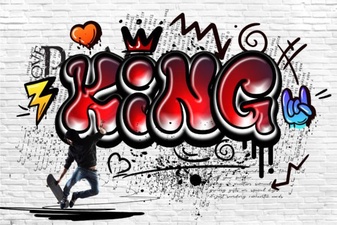 Designing with King Font: Typography Projects & Inspiration
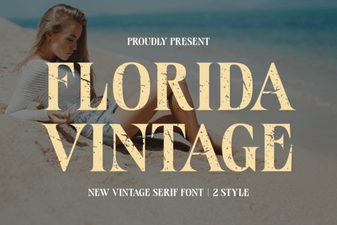 Vintage Florida Fonts for Your Creative Projects
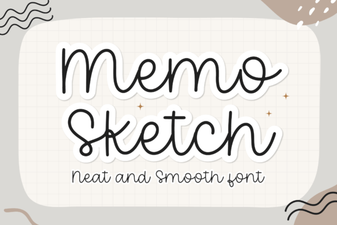 Memo Sketch Font for Creative Design Projects